
Creatine Mono-Hydrate
A Personal Trainer From Glasgow’s Thoughts on…
Intro
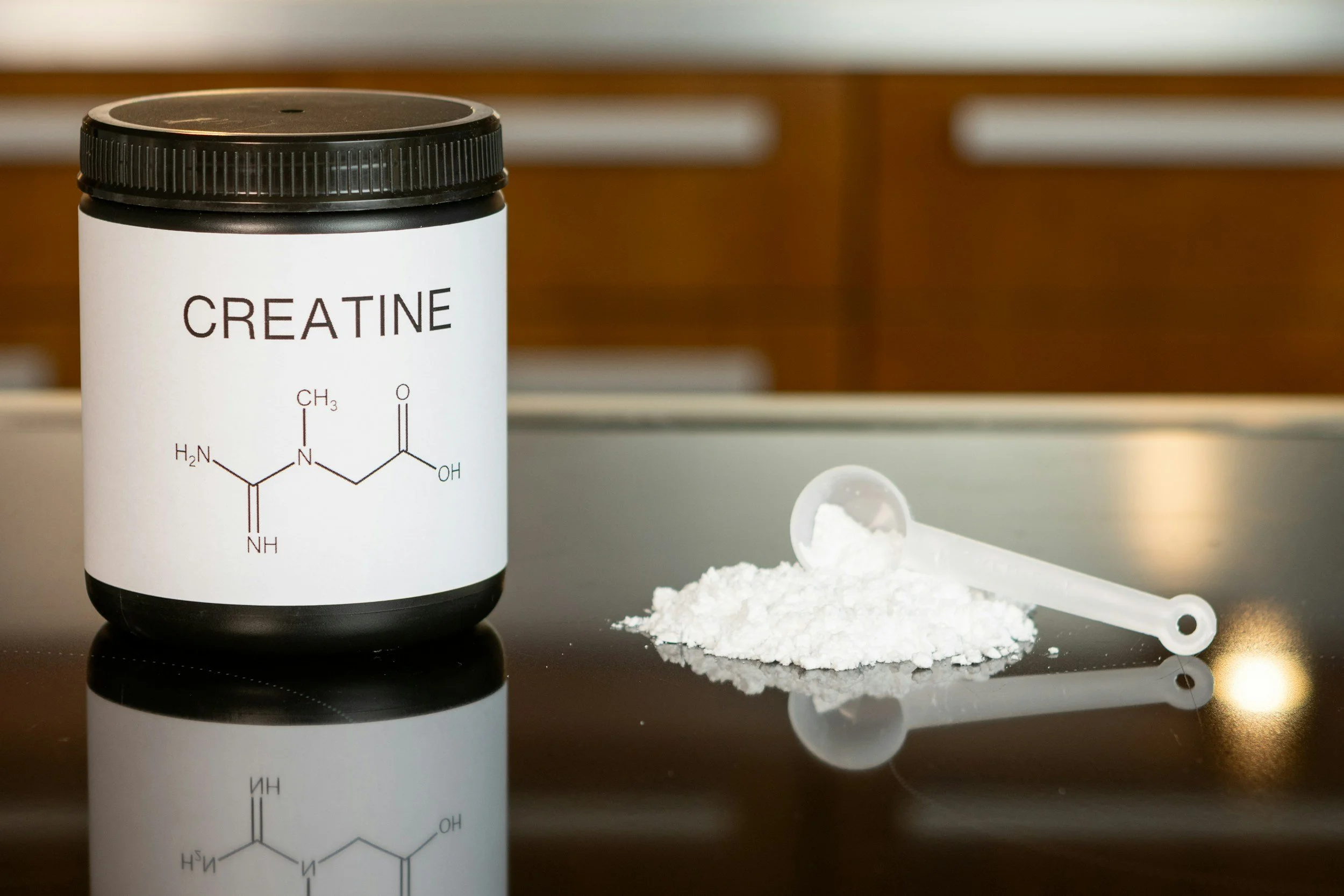
If you’re a fan of health and fitness podcasts you won’t have failed to have heard all the buzz recently about the benefits of supplementing with creatine mono-hydrate. With touted benefits ranging from increased strength to enhancing cognitive ability. Clients often ask about supplementing with creatine, and often unsure to exactly what it is. So I thought I’d write a quick blog and answer some of the questions I’m most often asked by clients, so people can make informed choices.
Creatine’s History As A Supplement
Creatine is often cited as a “gold standard supplement” as it one of the most researched supplements in human history. Discovered 200 years ago by by French chemist Michel Eugène Chevreul after extracting it from muscle, first experimentally trialled by humans at Harvard over 100 years ago, with over 700 peer led reviews, and some studies lasting 14 years. Its safe to say we know a lot about creatine.
What Does Naturally Occurring Creatine Do In The Body?
The average person makes about 1.5 grams of creatine a day. Think of creatine as a high-speed backup battery for your muscles. Creatine helps speed up the conveyor belt that recycles the energy in your cells. Supplementing with creatine mono-hydrate can enhance this “high speed back up battery” even more.
What Aspects of Health and Fitness Can Supplementing With Creatin-monohydrate Improve?
Increased Muscular Strength- increased power output and max force.
Enhanced Muscular Endurance- Enhances performance in short, high-intensity bursts (<30 seconds).
Fuller Muscle Appearance- Increases muscle volume via water retention.
Improved Brain Health- Supports ATP levels in neurons for better cognitive processing.
For those who like a deeper dive in to the science here’s how supplementing with creatine improves these areas of fitness and health.
1. The Energy Boost (ATP Production)
The only energy source our cells use to fuel themselves is ATP (Adenosine Triphosphate). The glucose and fats we eat in our diet is used to make ATP. ATP is the fundamental currency of energy in your body. The primary role of creatine is to help your cells produce more ATP.
When you lift a heavy weight or sprint, your body uses ATP for energy.
We release energy from ATP by breaking one of the three phosphate bonds (tri-phosphate).
When one of the phosphate bonds are broken, ATP turns into ADP (Adenosine Diphosphate), which is essentially a "dead battery."
Creatine "donates" a phosphate molecule to ADP, instantly turning it back into energy enriched ATP “a fully charged battery”.
The Result: You can squeeze out 1–2 more reps or shave a second off your sprint before your muscles fatigue than you could without the creatine, over time this will lead to a significantly stronger more efficient muscle with the right training.
2. Muscle Cell Hydration
Creatine is osmotic, meaning it pulls water into your muscle cells. This is a great for muscle health for the following reasons:
The "Anabolic Signal" (Growth)
When a muscle cell is saturated with water, it actually swells. This swelling isn't just for show; the cell perceives this internal pressure as a threat to its structural integrity.
To protect itself, the cell triggers an anabolic (building) response:
It increases protein synthesis (building new muscle fibres).
It decreases protein breakdown (protecting the muscle you already have).
The Result: Your body shifts into a "growth mode" simply because the cells are full of fluid.
Improved Nutrient Transport
Water acts as a taxi for nutrients. When creatine pulls more water into the muscle, it creates a more efficient environment for moving:
Amino Acids: The building blocks for repair.
Glucose (Glycogen): Your primary fuel source for workouts.
The Result: Better "fuelling" during your sets and faster "refuelling" afterward.
Better Leverage and "The Pump"
There is a mechanical advantage to having fuller muscle cells.
Leverage: A fuller, denser muscle can actually change the "angle of pull" slightly, providing better mechanical leverage during heavy lifts.
The Pump: This extra volume contributes to the "muscle pump" sensation, which has been shown to stretch the fascia (the tight sheath around your muscles), theoretically allowing more room for long-term growth.
Temperature Regulation and Stamina
Muscles generate a lot of heat when they work. Water has a high "heat capacity," meaning it can absorb a lot of heat before the temperature rises.
A well-hydrated muscle can "buffer" the heat generated during a gruelling workout.
The Result: You can go longer before your muscles feel that "burning" sensation or hit exhaustion.
3. Protein Synthesis and Muscle Growth
Beyond just the immediate energy, creatine influences the long-term pathways for muscle building:
Lowering Myostatin: It can reduce levels of myostatin, a protein that keeps muscle growth in check.
IGF-1 Signaling: It may boost insulin-like growth factor 1, which stimulates muscle mass increases.
Enhanced Recovery: By reducing cell damage and inflammation, it helps you bounce back faster for your next workout.
4. Cognitive Benefits
While most people take it for the "gains," your brain is also a massive energy consumer. Recent research suggests creatine can:
Reduce mental fatigue during demanding tasks.
Improve short-term memory and reasoning, particularly in vegetarians or those who are sleep-deprived.
What Are The Potential Downsides To Supplementing With Creatine-Monohydrate?
While creatine monohydrate is often called the "gold standard" of supplements due to its safety profile, it isn't without its quirks. Most downsides are minor or related to how you take it, but they are worth noting.
Here are the potential downsides and side effects:
1. Digestive Distress
This is the most common complaint. If you take too much at once—especially during a "loading phase" (20g per day)—it can sit in your gut and draw in water, leading to:
Stomach cramps
Diarrhea
Nausea
Tip: You can usually avoid this by skipping the loading phase and just taking 3–5g daily, or by ensuring you take it with plenty of water.
2. Weight Gain (Water Weight)
Creatine causes intracellular water retention. While this is good for muscle function, it does have a "downside" on the scale:
Most people gain 1 kg (2 lbs) of water weight in the first week.
For athletes in weight-class sports (like wrestling or boxing) or endurance runners, this extra "non-functional" weight can be a disadvantage. But I would argue that the functional benefits of the having more water in the body far outweighs the efforts of carrying an extra 2 pounds
3. The "Non-Responder" Phenomenon
About 20–30% of people are "non-responders."
If your diet is already very high in red meat (like a carnivore diet), your muscle stores might already be topped off.
In this case, you might pay for the supplement and experience none of the strength or size benefits because your body simply excretes the excess.
4. Misconceptions & Lifestyle Hurdles
Dehydration/Cramping: While studies show creatine doesn't cause dehydration, it does change how your body uses water. If you don't increase your water intake, you might feel more prone to thirst or heat sensitivity.
The "Baldness" Debate: There was one 2009 study on rugby players suggesting creatine might increase DHT (a hormone linked to hair loss). However, this study has never been replicated, and dozens of follow-up studies have found no direct link between creatine and hair loss. If you aren't already genetically predisposed to male pattern baldness, it is likely a non-issue.
Is it safe for everyone
If you have pre-existing kidney disease, you should check with a doctor first. While creatine doesn't cause kidney damage, it increases creatinine levels in your blood (a marker used to test kidney function), which can lead to a "false positive" on a blood test making it look like your kidneys are struggling when they are actually fine.
Natural Food Source
Plants don’t contain any creatine. You will only really find it in animals and fish that have muscle, so even eggs only have minute amounts for this reason. Below are examples of some of the most creatine rich food you can consume.
Creatine Content (per 200grams)
Herring 2 grams
Beef (Lean) 1 grams
Pork 1 grams
Salmon 0.85 grams
Tuna 0.85 grams
Chicken 0.8 grams
Recommended Amounts
All the research indicates that supplement with 3-5 grams a day will gradually increase your creatine stores in your muscles to optimum levels in most people by three to four weeks.
Final Thoughts
Creatine mono-hydrate is such a well researched supplement with so many upsides and a so few downsides I would recommend my clients take it. The only significant downsides I can find is that it might cause digestive distress to some people or you may be one of the 20% of people who don’t respond to it and if this was the case you just stop taking it.
People often worry that due to creatine’s association with body building, that it acts like an anabolic steroid, it doesn’t, its a naturally occurring nutrient in the body that we make ourselves, and can get from animal meat, supplementing just increases the amount we can put in the muscle. When I take it I just feel a subtle improvement in my muscle strength and readiness and a definite improvement in my training. Caffeine has a much more obvious effect on me!
Muscular health is the biggest predictive factor in healthspan and lifespan, and if we can boost it by taking a fairly inexpensive, well researched supplement like creatine mono-hydrate is just a no brainer in my opinion. So many people who first come to my studio are suffering from significant muscle loss, creatine mono-hydrate can be one of the tools that helps reverse this trend. I would particularly recommend it for my older clients and vegetarian clients.